Basin Electric's Laramie River Station participates in security incident exercise
02 September 2026
The Wyoming National Guard recently conducted a no-notice exercise at Laramie River Station, located in Wheatland, Wyoming. The exercise was designed to test the ability to rapidly respond to threats against critical energy infrastructure.
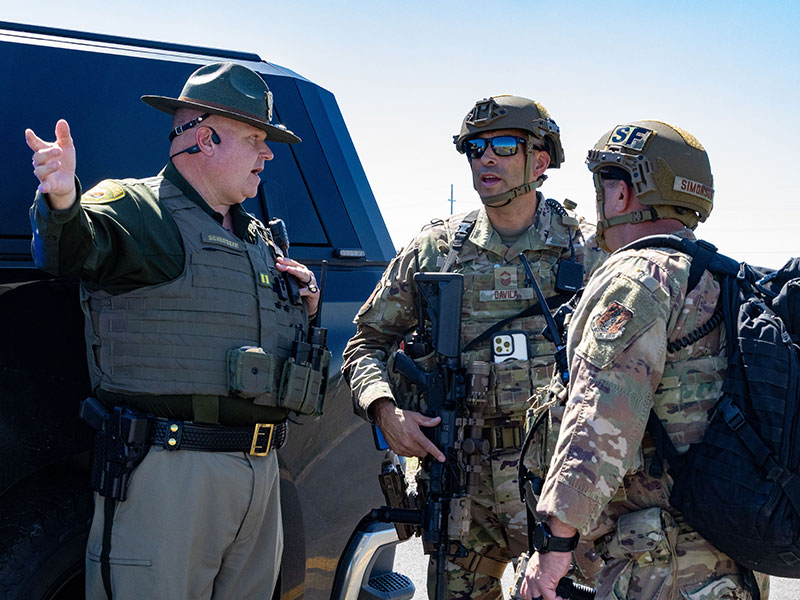
Teams from the Wyoming Highway Patrol and the Wyoming National Guard coordinate a response to the simulation.
The training combined a live deployment of the Wyoming Air National Guard's Quick Reaction Force with a tabletop exercise involving Wyoming National Guard command staff, the Army National Guard Response Force, and the Wyoming Highway Patrol.
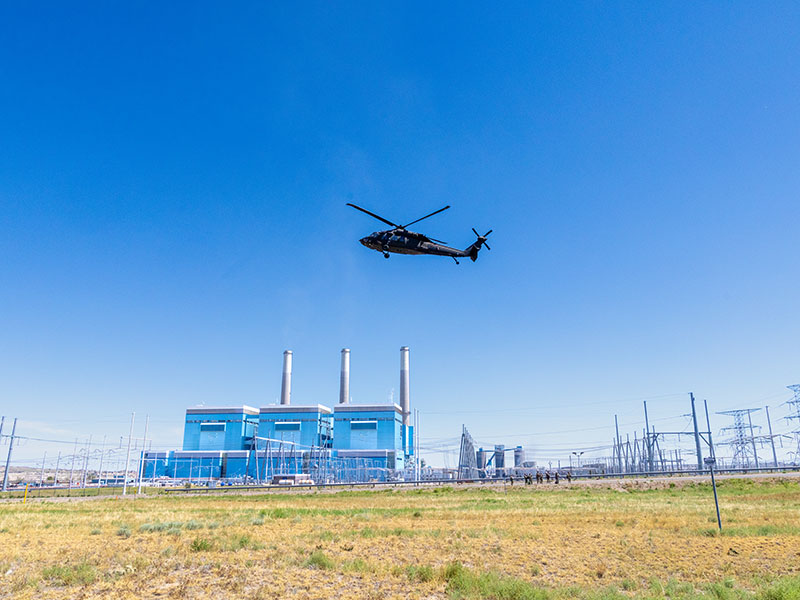
A Black Hawk helicopter was used in the simulation to bring National Guard members to Laramie River Station.
The exercise focused on a simulated attack on critical infrastructure, including a drone strike on Laramie River Station’s 230-kilovolt substation transformer. The exercise tested participants on how well the various emergency units coordinated their response, maintained communication, managed grid operations, transitioned operations between response forces, and ensured personnel safety.
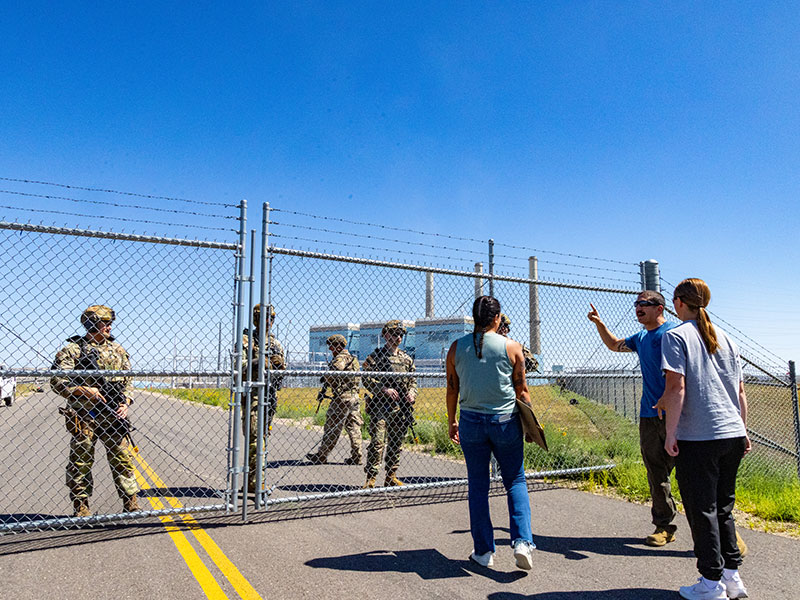
Protesters were included as part of the simulation.
For the staff at Laramie River Station, the exercise was an opportunity to work with the emergency response teams to strengthen and coordinate their own response capabilities.
“Exercises provide a low-risk way to evaluate preparedness before an emergency by testing plans, identifying gaps, and ensuring procedures can be executed effectively under pressure while reinforcing skills that can fade over time,” Levi Mickelsen, plant manager at Laramie River Station, said. “They also give teams a chance to work together across departments and with outside partners, building relationships that can make a big difference when an incident happens.”
Following the exercise, an After Action Review was conducted to identify what went well and where processes could improve.
“The lessons learned from this exercise will be documented and used to improve future training, exercises, and emergency response plans,” Daniel Graham, Basin Electric chief security and compliance officer, said.
The primary findings fell into three categories: exercise improvements, defining and documenting roles and responsibilities, and communication.
“We identified ways to make future exercises more realistic and valuable, helping better prepare teams for real-world incidents,” Graham said. “Discussions also highlighted the need to clearly define and document roles and responsibilities, so everyone understands their part in an emergency response. Future efforts will focus on strengthening communication practices to ensure information is shared clearly, consistently, and in a timely manner.”
Basin Electric wants all interested and qualified candidates to apply for employment opportunities. If you are an applicant with a disability who is unable to use our online tools to search and apply for jobs, or who needs other assistance or accommodations, please contact us at 701-223-0441. Please indicate the specifics of the assistance needed or provide your contact information, and a Basin Electric Human Resources representative will contact you. Basin Electric is an Equal Employment Opportunity Employer regarding race, color, religion, sex, sexual orientation, gender identity, national origin, disability, and veterans status.