Team Win: Basin Electric’s Transmission System Maintenance team responds to damaging storm
Jenifer Gray
10 August 2026
On June 29, 2026, a severe thunderstorm swept across South Dakota, producing wind gusts up to 131 mph near Highmore—among the strongest thunderstorm wind gusts ever reported in the United States.
The storm damaged three 345-kilovolt (kV) transmission lines within Basin Electric’s service area:
In total, approximately 11 miles of transmission line were damaged, and 45 transmission structures were destroyed.
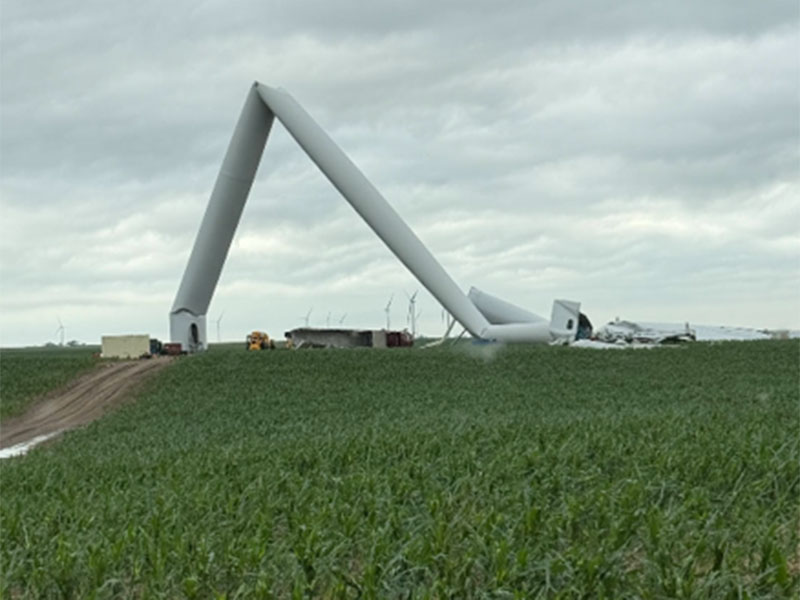
The force of the storm bent a wind turbine in half.
While the damage was extensive, Basin Electric’s Transmission System Maintenance (TSM) team, along with teams from operations, engineering, construction, and logistics, coordinated a response that helped crews quickly begin restoration efforts while maintaining reliable service across the region.
The restoration process began as soon as TSM identified the transmission line trips. “After receiving notification of the outages, teams worked to gather fault records, coordinate with external entities, when necessary, provide fault location data to field personnel, and mobilize crews to patrol the affected lines,” Derik Johnson, Basin Electric director of TSM, says. “These efforts helped determine the extent of the damage and laid the groundwork for restoration planning.”
One key advantage was the availability of recent LiDAR mapping data for the damaged lines. LiDAR is a tool that uses lasers to measure distances and create a detailed 3D picture of an area. Using that data, the engineering team was able to develop a restoration design the very next day.
"The recent LiDAR data was extremely useful for engineering to get a restoration design finished in a single day," Johnson says. "It allowed us to quickly move into material procurement, logistics planning, and restoration prioritization."
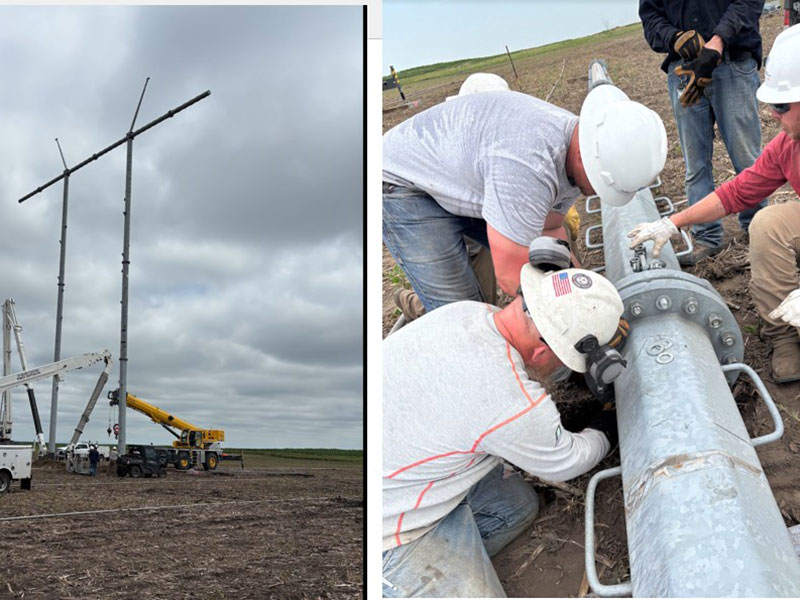
Crews work to repair the damage sustained by the storm.
Once the restoration strategy was established, the focus shifted to moving people, equipment, and materials to the damaged sites. At the same time, Basin Electric coordinated with demolition contractors to remove damaged infrastructure and secured construction contractors to assist with rebuilding efforts. The process began to procure replacement restoration structures to replenish inventory.
“Fortunately, Basin Electric had invested in additional restoration materials following a previous major storm event,” Johnson says. "We had 45 restoration structures in stock and 45 structures down, so we had enough inventory available to begin rebuilding immediately." That foresight helped eliminate potential delays and accelerated recovery efforts.
While the storm damage itself presented significant challenges, the weather during restoration created another obstacle. Crews worked through extremely hot conditions as they rebuilt damaged transmission infrastructure.
To combat the heat, workers used running vehicles as cooling stations and relied on personal cooling neck towels to stay safe and productive in the field.
“Their dedication and adaptability helped keep restoration work moving forward despite difficult environmental conditions,” Johnson says.
Teamwork plays a critical role in repairing the damage from the storm.
Although multiple high-voltage transmission lines were damaged, Basin Electric's bulk power transmission system continued to demonstrate its resilience.
“The Antelope Valley Station-Broadland line was out of service from June 29 through July 28,” Johnson says. “The Chapelle Creek-Fort Thompson line is currently scheduled to remain out of service until Aug. 15, while the Leland Olds Station-Chapelle Creek line is scheduled to remain out until Sept. 30.”
Even with several major transmission components unavailable, the larger transmission network continued serving load with minimal interruption. "The bulk power system is a very resilient system," Johnson explained. "You can take out multiple transmission elements, and the system remains able to continue serving distribution loads without much interruption."
The member system most directly affected by the storm was East River Electric Power Cooperative (East River) and its member cooperatives. “Despite the damage to Basin Electric’s transmission facilities, the transmission lines did not prevent load delivery to East River,” Jeremy Severson, vice president of Transmission, says. “The interconnected nature of the bulk power system allowed power to continue flowing through alternate paths across the network.”
Once East River restored its own affected facilities, it was able to bring its customers back online, even while portions of Basin Electric's damaged transmission lines remained out of service.
The storm also reinforced the importance of Basin Electric's all-of-the-above energy strategy. A diverse generation portfolio is only as effective as the transmission system that connects it. Strong, resilient transmission infrastructure allows power to flow across multiple routes, ensuring member systems can continue receiving reliable electricity even when major assets are damaged.
While restoration work continues on portions of the damaged system, the response to this storm highlights the strength of Basin Electric's planning, preparedness, and teamwork. Investments made years ago in restoration materials, mapping technology, and transmission resilience proved invaluable when severe weather struck.
Most importantly, the event demonstrated the commitment of Basin Electric employees and contractors who worked under challenging conditions to restore critical infrastructure and maintain reliable service for members across the region.
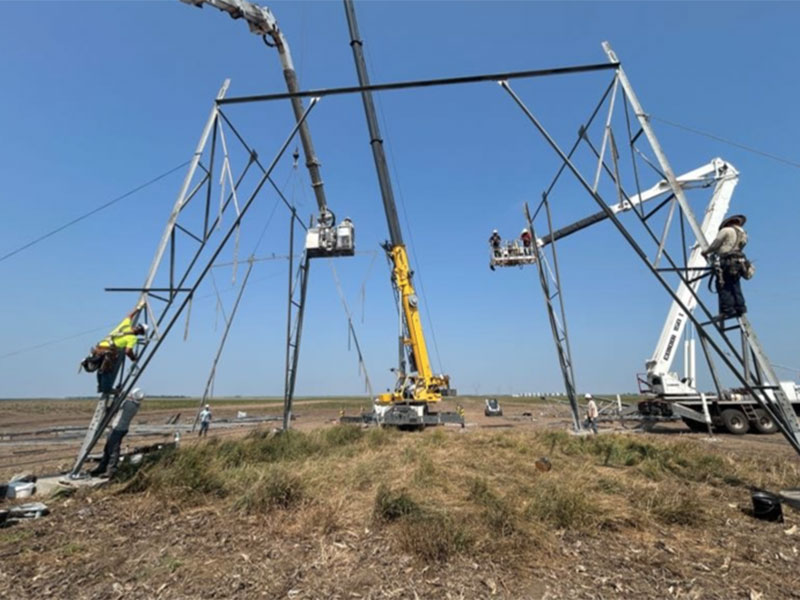
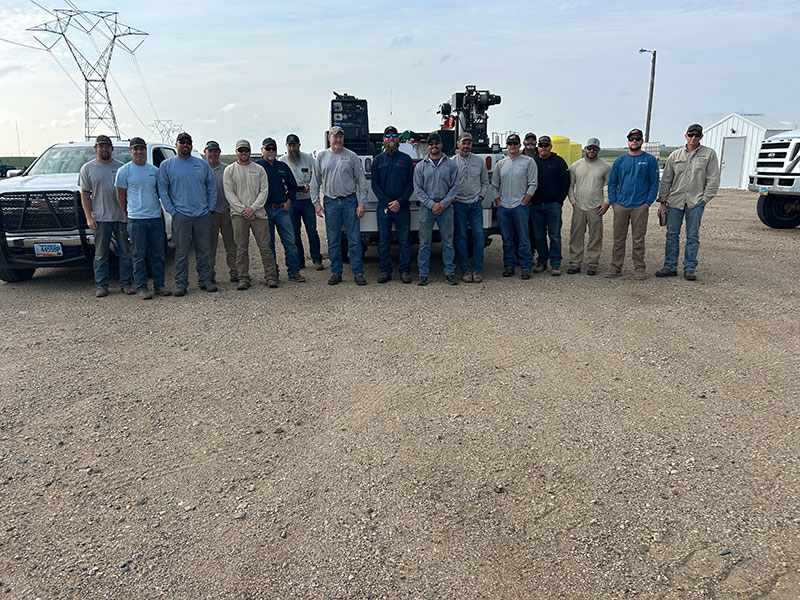
Photo showing some of the crew who worked tirelessly to repair the damage done by the severe weather event.
Basin Electric wants all interested and qualified candidates to apply for employment opportunities. If you are an applicant with a disability who is unable to use our online tools to search and apply for jobs, or who needs other assistance or accommodations, please contact us at 701-223-0441. Please indicate the specifics of the assistance needed or provide your contact information, and a Basin Electric Human Resources representative will contact you. Basin Electric is an Equal Employment Opportunity Employer regarding race, color, religion, sex, sexual orientation, gender identity, national origin, disability, and veterans status.